바쿠
UTC+4아제르바이잔 · AZT
2026년 9월 22일 (화)
시간대 분석 & 주요 사실
아제르바이잔의 바쿠 현지 시각은 현재 UTC+4 표준시입니다. 이 시간대는 일년 내내 고정(UTC+4)되어 있으며 서머타임을 적용하지 않습니다. 바쿠보다 뉴욕시간 빠릅니다. 뉴욕와(과)의 업무 시간 겹침은 하루 1시간(undefined)입니다. 글로벌 협업을 위한 최적의 화상 회의 시간대는 바쿠입니다. 바쿠보다 런던시간 빠릅니다. 런던와(과)의 업무 시간 겹침은 하루 6시간(undefined)입니다. 글로벌 협업을 위한 최적의 화상 회의 시간대는 바쿠입니다. 바쿠보다 도쿄시간 빠릅니다. 도쿄와(과)의 업무 시간 겹침은 하루 4시간(undefined)입니다. 글로벌 협업을 위한 최적의 화상 회의 시간대는 바쿠입니다. 이 시간대를 공유하는 주요 도시: 두바이, 아부다비, 무스카트. WorldClock.info는 공식 IANA 데이터베이스를 기반으로 정확한 시간을 제공합니다.
도시 기본 정보
아제르바이잔 바쿠의 추정 인구는 약 2.3M입니다. 오늘의 일조 시간은 약 14.8시간입니다 (일출: 05:24, 일몰: 20:12). 이 시간대는 일년 내내 고정(UTC+4)되어 있으며 서머타임을 적용하지 않습니다. 북반구, 적도 북쪽 약 40°에 위치합니다. 차량은 우측 통행입니다.
국기
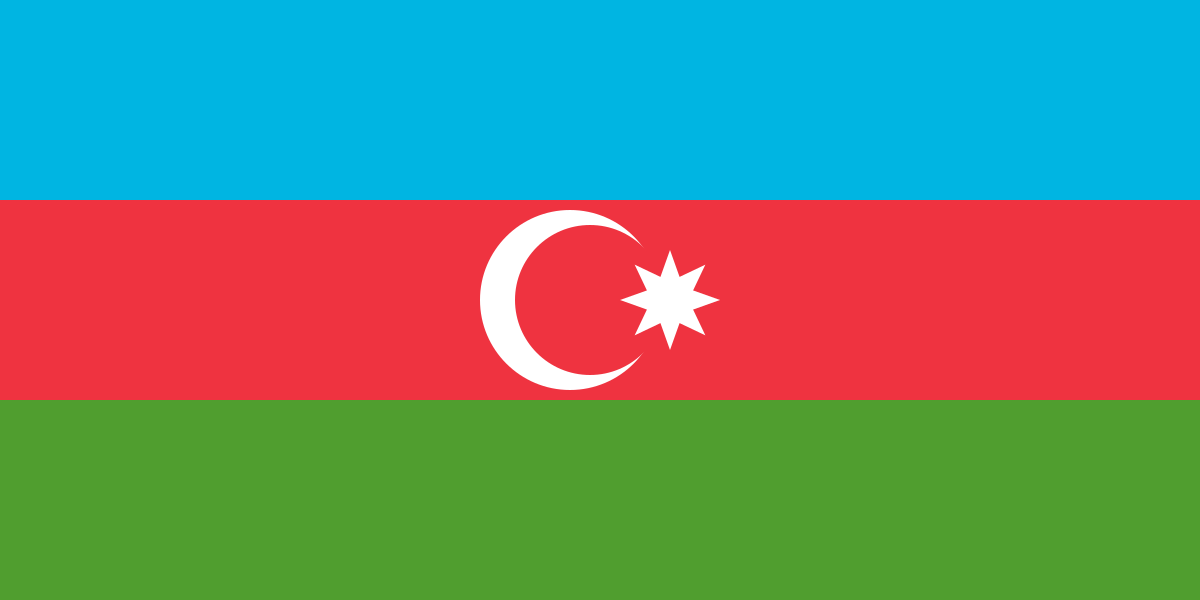
아제르바이잔
수도
바쿠 👑
대륙
아시아
시간대
AZT · Asia/Baku
좌표
40.41°N, 49.87°E
통화
AZN (₼)
국가 번호
+994
통행 방향
우측
반구
북반구
공용어
아제르바이잔어
측량 단위
미터법
알고 계셨나요?
A Hillside Near Baku Has Been on Fire Since Before Marco Polo Saw It
On the Absheron Peninsula, just outside Baku, there is a hillside called Yanar Dağ — "burning mountain." Flames up to three metres high come out of a thin layer of porous rock and do not go out. They are fed by a steady seep of natural gas from below, and they have been burning continuously for centuries. Marco Polo wrote about flames coming out of the ground in this region in the thirteenth century.
Azerbaijan is called the Land of Fire for a reason, and the fires are old enough that they are generally thought to be connected to the development of Zoroastrianism, whose ceremonies were built around sacred flames.
The country also has more mud volcanoes than anywhere on Earth. Counts vary depending on what you include — official Azerbaijani sources say over 220, international estimates run to 400 or more — but every source agrees the country holds roughly half the world's total. There are another 140-odd on the floor of the Caspian, and eight islands in the Baku archipelago were created by mud volcanic eruptions.
Unlike ordinary volcanoes these are cool to the touch, around 22°C, because there is no magma involved. They still erupt spectacularly: in 2001 the Lokbatan volcano, fifteen kilometres from Baku, sent flames tens of metres into the air.
All of this is surface evidence of what is underneath, which is oil. In 1901, Azerbaijan produced 11.5 million tons of it — about 51% of the entire world's supply. Half the planet's oil came out of one corner of the Caspian.
The clock: Baku's own name is thought to come from the Persian bad-kube, "wind-pounded city," which tells you what the weather does. Its clock is more settled. Azerbaijan runs on UTC+4, a zone built for the 60th meridian, while Baku sits at just under 50° east — so the city runs about forty minutes ahead of its own sun, permanently.
There is something appropriate about that. On a peninsula where the ground has been keeping its own uninterrupted flame for a thousand years without reference to anybody's schedule, the clock on the wall is forty minutes out and nobody minds.
출처 및 참고자료
- Wikipedia, *Yanar Dagh* (3 metrelik alevler, gözenekli kumtaşı)
- Wikipedia, *Mud volcanoes in Azerbaijan* (dünya toplamının yaklaşık yarısı)
- CNN, *Azerbaijan, mud volcano capital of the world* (400'den fazla; 2001 Lokbatan püskürmesi; 22-23°C)
- azerbaijan.az resmî sayfası (220'den fazla; 140 deniz altı; sekiz ada)
- Rustic Pathways (1901'de 11,5 milyon ton = küresel üretimin %51'i)
- Komoot/Wikipedia (Marco Polo'nun 13. yüzyıl kaydı)
연간 일조 시간
업무 시간
8시간 겹침