Quito
UTC−5Ecuador · ECT
Heure locale actuelle à Quito
mer. 23 sept. 2026
Lever et coucher du soleil, durée du jour à Quito
Guide du fuseau horaire de Quito
Quito, Ecuador est calé sur UTC−5. Ce fuseau horaire reste fixé toute l'année à UTC−5 — pas d'heure d'été. Il y a 1 heures de décalage entre Quito et New York. Les horaires habituels de bureau (9h–18h) se chevauchent environ 8 heures par jour avec New York. Créneau optimal pour un appel : 09:00–17:00 à Quito correspond à 10:00–18:00 à New York. Il y a 6 heures de décalage entre Quito et Londres. Les horaires habituels de bureau (9h–18h) se chevauchent environ 3 heures par jour avec Londres. Créneau optimal pour un appel : 09:00–12:00 à Quito correspond à 15:00–18:00 à Londres. Il y a 14 heures de décalage entre Quito et Tokyo. Les heures de travail ne se chevauchent pas avec Tokyo ; les réunions nécessitent un horaire décalé. Ce fuseau horaire est également partagé avec des villes comme Chicago, Bogota, Lima. Prendre en compte ces décalages facilite les appels et les voyages vers et depuis Quito.
Informations pratiques sur Quito
Quito (Ecuador) compte environ 2.8M habitants. Aujourd'hui, il y a environ 12.2 heures de jour : lever du soleil à 06:00, coucher à 18:12. Ce fuseau horaire reste fixé toute l'année à UTC−5 — pas d'heure d'été. Elle est située dans l'hémisphère sud, à environ 0° au sud de l'équateur. La circulation se fait à droite.
Drapeau
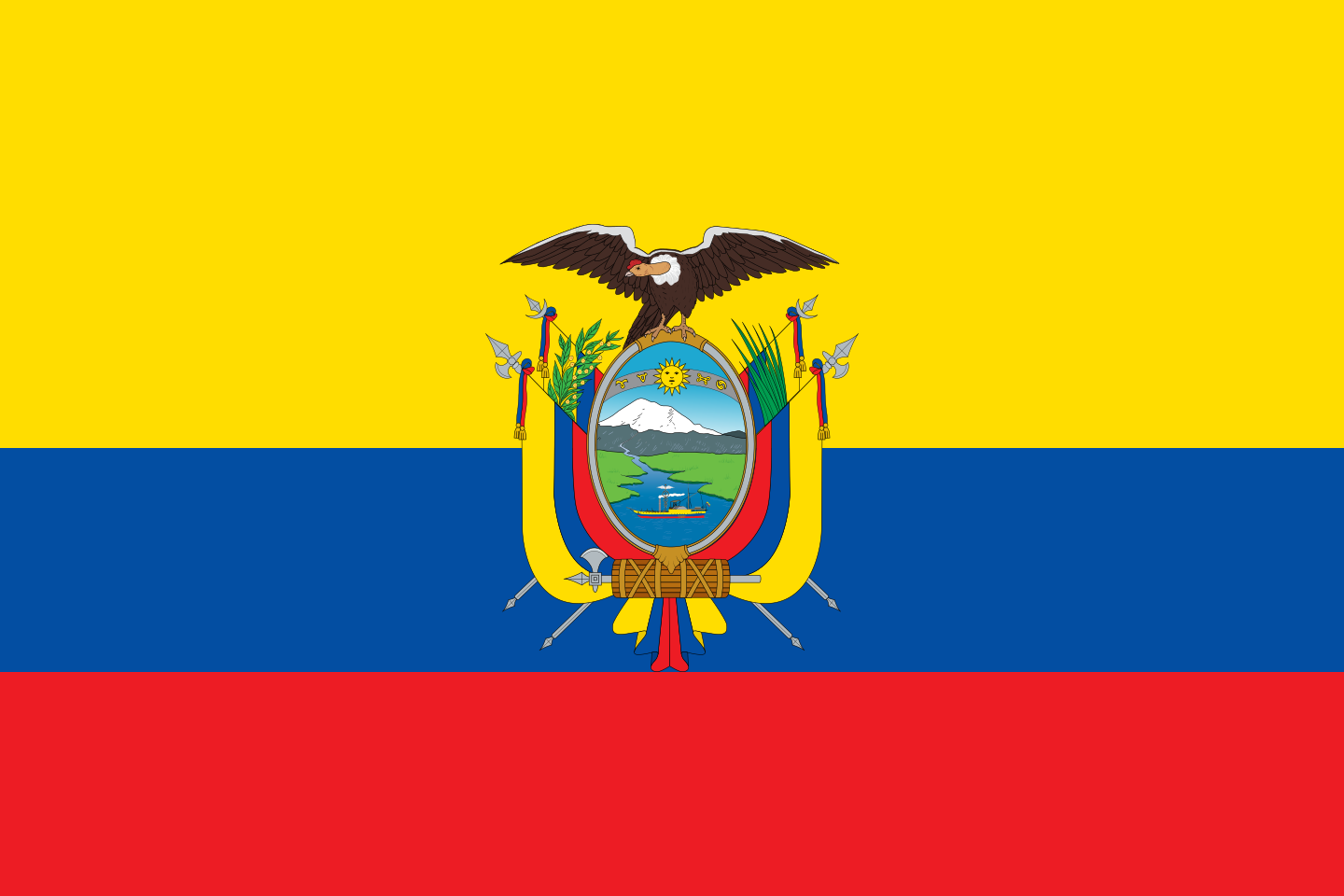
Ecuador
Capitale
Quito 👑
Continent
Amérique du Sud
Fuseau horaire
ECT · America/Guayaquil
Coordonnées
0.18°S, 78.47°W
Devise
USD ($)
Indicatif
+593
Sens de circulation
Droite
Hémisphère
Sud
Langue
Espagnol
Système de mesure
Métrique
Le saviez-vous ?
Le milieu du monde est à 240 mètres de là
1. Le monument le plus célèbre de l'Équateur marque l'équateur, et il n'est pas au bon endroit.
Mitad del Mundo — Milieu du monde — se trouve à 26 kilomètres au nord de Quito : un monument trapézoïdal de 30 mètres surmonté d'un globe, construit en 1979 pour remplacer un monument antérieur datant de 1936. Une ligne jaune court le long de la passerelle et traverse la structure, marquant zéro degré de latitude. C'est l'une des attractions les plus visitées de l'Équateur.
Le GPS moderne place le véritable équateur à environ 240 mètres (environ 787 pieds) au nord de cette ligne.
2. Ce n’était pas tant une erreur qu’une limite aux instruments du XVIIIe siècle.
La position a été fixée par la Mission géodésique française de 1736, dirigée par Charles-Marie de La Condamine, venue en Amérique du Sud pour mesurer la forme de la Terre et confirmer son renflement à l'équateur. Ils l’ont fait avec succès. Ils étaient également, selon les normes de l’époque, remarquablement proches.
Deux cent quarante mètres sur quarante millions représentent une erreur d'environ 0,0006 %.
3. Le site qui prétend être sur le « vrai » équateur peut également être hors ligne.
Le Musée Intiñan voisin, créé après que le GPS ait révélé l'écart, se présente comme la véritable ligne. Certaines mesures suggèrent qu'il est également absent - peut-être 50 mètres.
Il y a donc deux monuments de l'équateur à distance de marche l'un de l'autre, et d'après la lecture la plus stricte, aucun n'y figure exactement.
4. Ce n'est pas la seule ligne zéro au mauvais endroit.
La bande de laiton de l'Observatoire royal de Greenwich, que des millions de personnes se photographient chevauchant, se trouve à environ 102 mètres de l'endroit où tombe réellement le méridien de référence moderne – pour une raison différente mais liée, impliquant la gravité locale et le passage des mesures astronomiques aux mesures satellitaires.
Les deux lignes les plus photographiées de l'humanité — 0° de latitude et 0° de longitude — sont toutes deux marquées à quelques centaines de mètres de la réalité.
L'horloge : Quito se trouve à quelques kilomètres de l'équateur, ce qui lui confère le ciel le plus régulier de la Terre. Le lever et le coucher du soleil se produisent vers six heures, tous les jours, toute l'année, avec presque aucune variation saisonnière. Il n’y a rien ici à sauvegarder pour l’heure d’été, et l’Équateur ne l’utilise pas.
La ville elle-même se trouve à environ 78,5° ouest, sur UTC−5, qui est construite pour le 75e méridien, laissant Quito environ quatorze minutes en avance sur son propre midi solaire.
Donc : une ville avec la lumière du jour la plus prévisible au monde, à côté d'un monument célébrant la ligne qui la produit, à 240 mètres de la ligne.
Sources
- Smithsonian Magazine, *Beaucoup de bruit pour rien à l'équateur* (1979'da inşa edilen ~30 metrelik anıt; Gerçek ekvatorun modern GPS'e gore birkaç yüz fit Kuzeyde olması)
- Musées merveilleux (240 mètres / 787 fit güney sapması; 1736 Fransız Jeodezi Misyonu'nun teknolojik sınırları; GPS'in birkaç meter hassasiyeti)
- Voyage à Quito (26 km mesafe; 1979 tarihi; gerçek ekvatorun Intiñan Müzesi'nden geçmesi)
- Zoe Goes Places (1936'daki acabit anıt; Intiñan'ın da ~50 mètres sapmış olabileceği)
- Bushop (1936 et 1979 ont commencé à parcourir le chemin de fer ~ 240 mètres de distance)
- N'arrêtez jamais de voyager (Greenwich'teki basangıç meridyeninin de GPS'e göre ~100 yarda sapması)
- Malys ve ark., *Journal of Geodesy* (2015) — Greenwich atteint 102 478 mètres d'altitude, Londres a déclaré sa destination.
- Boylam hesabı: Quito 78,5°B, UTC−5 meridyeni 75°B → ~14 jours
Durée du jour au fil de l’année à Quito
Le soleil et l’horloge à Quito (2026)
Quito se trouve à 78.5° O. Son fuseau horaire, UTC−5, est calé sur le méridien 75° O. L’écart de 3.5° entre les deux fait que l’horloge avance d’environ 14 minutes sur le soleil : le midi solaire arrive vers 12:14 au lieu de 12:00. Le fuseau reste à UTC−5 toute l’année : il n’y a pas d’heure d’été ici.
Le jour le plus long de 2026 est le 22 décembre, avec 12 h 8 min de lumière. Le plus court est le 21 août, avec 12 h 7 min. L’écart entre les deux est de 1 minutes. À quelques degrés de l’équateur, la durée du jour ne varie presque pas de l’année.
Le lever le plus précoce et le coucher le plus tardif ne tombent pas le jour le plus long. À Quito, le soleil se lève le plus tôt le 2 novembre à 05:54, tandis que le coucher le plus tardif attend le 13 février à 18:32. C’est l’équation du temps qui les sépare : l’orbite elliptique de la Terre et l’inclinaison de son axe décalent le midi solaire de plusieurs minutes au fil de l’année.
Le ciel reste clair un moment après le coucher du soleil. À Quito, ce crépuscule civil dure environ 21 minutes à l’équinoxe.
Toutes les valeurs de cette section sont calculées à partir de la latitude, de la longitude et du fuseau IANA de la ville avec les algorithmes solaires de la NOAA (Spencer, 1971), avec une précision d’environ ±2 minutes d’arc sous 65° de latitude.