Chatham Islands
UTC+12:45뉴질랜드 · CHAST
2026년 9월 23일 (수)
시간대 분석 & 주요 사실
뉴질랜드의 Chatham Islands 현지 시각은 현재 UTC+12:45 표준시입니다. 이 지역은 서머타임(일광 절약 시간제)을 시행하며, 겨울철 표준시(UTC+12:45)와 여름철 서머타임(UTC+13:45) 간에 시간이 조정됩니다. 다음 서머타임 전환일은 9월 26일입니다. Chatham Islands보다 뉴욕시간 빠릅니다. 뉴욕와(과)의 업무 시간 겹침은 하루 1.8시간(undefined)입니다. 글로벌 협업을 위한 최적의 화상 회의 시간대는 Chatham Islands입니다. Chatham Islands보다 런던시간 빠릅니다. 런던와(과)는 시차로 인해 통상적인 근무 시간(09:00-18:00) 겹침이 없습니다. Chatham Islands보다 도쿄시간 빠릅니다. 도쿄와(과)의 업무 시간 겹침은 하루 5.3시간(undefined)입니다. 글로벌 협업을 위한 최적의 화상 회의 시간대는 Chatham Islands입니다. WorldClock.info는 공식 IANA 데이터베이스를 기반으로 정확한 시간을 제공합니다.
도시 기본 정보
뉴질랜드 Chatham Islands의 추정 인구는 약 600입니다. 오늘의 일조 시간은 약 9.0시간입니다 (일출: 07:54, 일몰: 16:54). 이 지역은 서머타임(일광 절약 시간제)을 시행하며, 겨울철 표준시(UTC+12:45)와 여름철 서머타임(UTC+13:45) 간에 시간이 조정됩니다. 다음 서머타임 전환일은 9월 26일입니다. 남반구, 적도 남쪽 약 44°에 위치합니다. 차량은 좌측 통행입니다.
국기
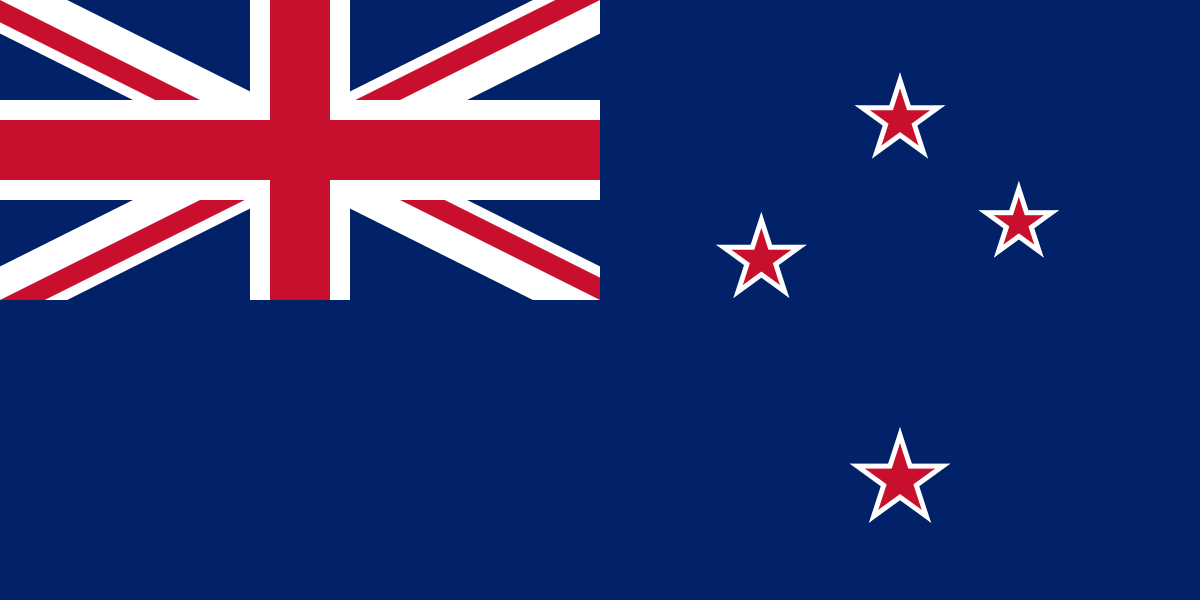
뉴질랜드
수도
웰링턴
대륙
오세아니아
시간대
CHAST · Pacific/Chatham
좌표
43.95°S, 176.50°W
통화
NZD ($)
국가 번호
+64
통행 방향
좌측
반구
남반구
공용어
영어, 마오리어
측량 단위
미터법
알고 계셨나요?
Six Hundred People Invented a Time Zone and Parliament Legalised It Twenty-Nine Years Later
In 1980 there were five Chatham Island black robins left alive in the world.
Not five hundred. Five. All on Little Mangere Island, a fifteen-hectare rock ringed by cliffs. Among them was exactly one breeding female, banded and known thereafter as Old Blue. The species had no other future.
It had been the world's rarest bird for some time. Wildlife officers counted around thirty in 1968. By 1976 there were seven, and Don Merton's New Zealand Wildlife Service team moved them to the larger Mangere Island — descending rock faces with birds in hand — where over 100,000 trees had been planted to make habitat. Two more died anyway.
What saved the species was a technique. Eggs were taken from the nest and cross-fostered to Chatham Island tomtits, which raised the chicks, which induced the robin to lay again. The team also pushed eggs back into the centre of nests, because some females had a habit of laying them on the rim where they rolled out.
Old Blue lived to thirteen or fourteen — extraordinary for a robin — and vanished in 1983 or 1984.
There are now around 350 black robins, and every single one is descended from her. In 2022 the species was downlisted from Endangered to Vulnerable.
So the Chathams hold roughly 600 human residents and 350 birds that exist because of one female that died forty years ago. It is a place where very small numbers have a habit of holding — which is also, as it happens, how the islands got their time zone.
About 800 kilometres east of New Zealand's South Island, roughly along the 176th meridian west, sit the Chatham Islands. Permanent population: around 600.
They have their own time zone.
Chatham Standard Time is UTC+12:45 — forty-five minutes ahead of mainland New Zealand. In summer it becomes UTC+13:45. It is one of only three offsets on Earth ending in :45, the others being Nepal at UTC+5:45 and an unofficial zone around Eucla in Australia.
The history is the good part. The Standard Time Act 1945 set New Zealand's clock to UTC+12. The Chathams simply put their clocks forty-five minutes ahead of that and carried on. There was no legal basis for it. It was just what the islands did.
Parliament caught up in 1974, when the Time Act formally recognised the offset that had already been in daily use for nearly three decades.
Six hundred people invented a time zone by agreeing among themselves, and the country ratified it afterwards.
The clock: the forty-five minutes are not arbitrary. UTC+12:45 corresponds to a meridian at 168°45′ west. The Chathams sit at about 176°30′ west, which leaves the islands roughly half an hour ahead of their own sun — closer than a whole-hour zone would have managed in either direction.
Even the clock changes carry the offset. Daylight saving on the Chathams begins on the last Sunday in September at 2:45 a.m., and ends on the first Sunday in April at 3:45 a.m. The islands do not round anything, ever.
And because of where they sit, the Chathams are among the first inhabited places on Earth to see each sunrise — competing for that title with Kiribati, Tonga and, since 2011, Samoa.
Six hundred people, forty-five minutes, and a permanent place at the front of the world's day.
출처 및 참고자료
- Yeni Zelanda Koruma Departmanı (DOC), *Karure / Kakaruia / Chatham Island black robin* (2025'te ~350 birey; hepsinin Old Blue'dan gelmesi; Old Blue'nun 14 yaşına ulaşması)
- BirdLife International (1976'da yedi kuş; Mangere'ye taşıma ve 100.000 ağaç; yumurtaları yuvanın ortasına itme tekniği; 2022'de Hassas kategorisine indirilme)
- Connovation/DOC (1980'de beş birey, tek üreyen dişi)
- Predator Free NZ (1968'de ~30 birey; Little Mangere'nin ~15 hektar olması; Old Blue'nun 1983-84'te kaybolması)
- Creation.com (Old Yellow; çapraz kuluçka tekniği)
- Wikipedia, *Chatham Standard Time Zone* (UTC+12:45; üç adet :45 kayması; 1974 Time Act)
- General Blue (1945 Standart Saat Kanunu ve adaların gayriresmî 45 dakikalık kaydırması; DST'nin 02:45 ve 03:45'te başlaması/bitmesi)
- Geography Worlds (~600 nüfus; anakaradan 800 km; 176. meridyen)
- time.is/Chatham_Islands (görünür güneş saatine göre 37 dakika ileri; enlem −44,0, boylam −176,5)
- Wikipedia, *Time in New Zealand*
연간 일조 시간
업무 시간