레이캬비크
UTC+0아이슬란드 · GMT
2026년 9월 22일 (화)
시간대 분석 & 주요 사실
아이슬란드의 레이캬비크 현지 시각은 현재 UTC+0 표준시입니다. 이 시간대는 일년 내내 고정(UTC+0)되어 있으며 서머타임을 적용하지 않습니다. 레이캬비크보다 뉴욕시간 빠릅니다. 뉴욕와(과)의 업무 시간 겹침은 하루 5시간(undefined)입니다. 글로벌 협업을 위한 최적의 화상 회의 시간대는 레이캬비크입니다. 레이캬비크보다 런던시간 빠릅니다. 런던와(과)의 업무 시간 겹침은 하루 8시간(undefined)입니다. 글로벌 협업을 위한 최적의 화상 회의 시간대는 레이캬비크입니다. 레이캬비크보다 도쿄시간 빠릅니다. 도쿄와(과)는 시차로 인해 통상적인 근무 시간(09:00-18:00) 겹침이 없습니다. 이 시간대를 공유하는 주요 도시: 아크라, 다카르, Kumasi. WorldClock.info는 공식 IANA 데이터베이스를 기반으로 정확한 시간을 제공합니다.
도시 기본 정보
아이슬란드 레이캬비크의 추정 인구는 약 230K입니다. 오늘의 일조 시간은 약 20.9시간입니다 (일출: 03:00, 일몰: 23:54). 이 시간대는 일년 내내 고정(UTC+0)되어 있으며 서머타임을 적용하지 않습니다. 북반구, 적도 북쪽 약 64°에 위치합니다. 차량은 우측 통행입니다.
국기
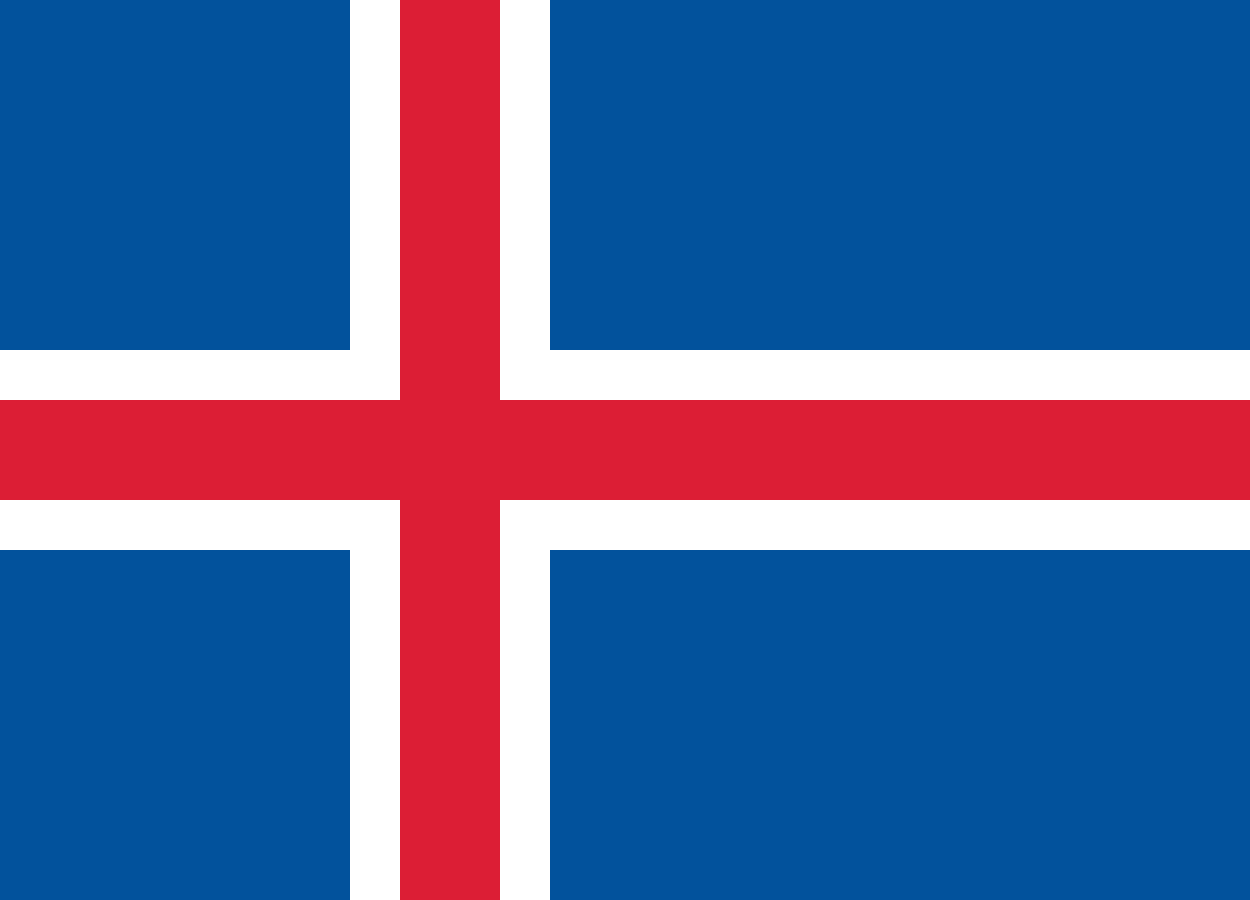
아이슬란드
수도
레이캬비크 👑
대륙
유럽
시간대
GMT · Atlantic/Reykjavik
좌표
64.15°N, 21.94°W
통화
ISK (kr)
국가 번호
+354
통행 방향
우측
반구
북반구
공용어
아이슬란드어
측량 단위
미터법
알고 계셨나요?
Iceland Abolished Daylight Saving by Making It Permanent
Iceland holds a Guinness World Record for most published writers per capita. The commonly cited figure is that one in ten Icelanders will publish a book at some point in their life. A country of roughly 370,000 people releases about 1,500 new titles a year — one new book for every 250 citizens.
There is a word for the run-up to Christmas, when most of them come out at once: Jólabókaflóð, the Christmas Book Flood.
Meanwhile, at least 85 to 90% of every home in Iceland is heated by geothermal water pumped out of the ground. Reykjavík runs one of the largest district heating systems in the world. The same water heats greenhouses that grow tomatoes and cucumbers through the winter, and in places it is run under the pavements to melt the snow off them.
So: a country that answered darkness with books, answered cold by plumbing a volcano, and — as we will see — answered the clock question by keeping summer time permanently.
Three responses to the same extreme, and all three of them are still running.
Reykjavík sits at about 22° west. By longitude, Iceland belongs on UTC−1. Most of the country lies between 13° and 24° west, squarely in that zone.
Iceland runs on UTC+0 — the same clock as London — all year, forever.
The result is the largest solar offset of any city on this site. Reykjavík's clock runs roughly ninety minutes ahead of its own sun. Solar noon in Reykjavík falls around half past one in the afternoon. In mid-December, sunrise does not arrive until around eleven in the morning, in a day that offers about four hours of light in total.
That beats Madrid, which had held the record here at about seventy-five minutes.
How it happened. Iceland had used UTC−1 since 1907, with daylight saving on top of it. On 5 April 1968 the Althing — one of the world's oldest parliaments, founded in 930 — passed a law abolishing daylight saving and setting the national time zone to UTC+0. It came into force two days later.
Read that carefully, because it is the interesting part. Iceland did not go back to standard time. It went forward to summer time and stayed there.
The stated reasoning was that permanent UTC+0 would "eliminate all of the above problems, but would still preserve the benefits of summer time" — keeping Iceland in step with Europe for trade and telephone calls, while holding on to the extra evening light.
The clock: the argument against changing the clocks was, in Iceland's case, unusually strong.
At 64° north, the seasons are so extreme that an hour in either direction is close to meaningless. In summer there is so much daylight that an extra hour changes nothing. In winter there is so little that no clock adjustment can fix it. A country with wildly variable days concluded that adjusting for variable days was pointless.
Since 1994 there have been repeated proposals to the Althing to bring daylight saving back. Every one has been rejected.
So Iceland is the country that solved the clock-change argument by refusing to change back — and has spent nearly sixty years living permanently ninety minutes ahead of its own sky, on purpose, with no plans to stop.
출처 및 참고자료
- Guinness World Records, *Most published writers per capita* (on İzlandalıdan biri)
- funfactz.com (yılda ~1.500 yeni başlık; 370.000 nüfus; Jólabókaflóð)
- Wikipedia, *Geothermal power in Iceland* (evlerin en az %90'ı; kaldırım ısıtma; seralar)
- İzlanda Hükümeti resmî sitesi (evlerin ~%85'i)
- Euronews Green (Reykjavík'in bölgesel ısıtma sistemi, ~200.000 kişi)
- Wikipedia, *Time in Iceland* (5 Nisan 1968 Althing yasası, 7 Nisan yürürlük; 1907'den beri UTC−01:00; 1994'ten beri reddedilen öneriler; "yaz saatinin faydalarını koruma" gerekçesi)
- time.is/Reykjavik (görünür güneş saatine göre 93 dakika ileri; enlem 64,14, boylam −21,90)
- Grokipedia, *Time in Iceland* (güneş öğleninin 13:30 civarına düşmesi; aralık ortasında 11:20 gündoğumu, ~4 saat gün ışığı)
- timezone.io (1968 kararının gerekçesi)
- Boylam hesabı: 21,9°B × 4 dk = ~88 dakika ortalama güneş saatine göre
연간 일조 시간
업무 시간
6시간 겹침