케이프타운
UTC+2남아프리카 공화국 · SAST
2026년 9월 22일 (화)
시간대 분석 & 주요 사실
남아프리카 공화국의 케이프타운 현지 시각은 현재 UTC+2 표준시입니다. 이 시간대는 일년 내내 고정(UTC+2)되어 있으며 서머타임을 적용하지 않습니다. 케이프타운보다 뉴욕시간 빠릅니다. 뉴욕와(과)의 업무 시간 겹침은 하루 3시간(undefined)입니다. 글로벌 협업을 위한 최적의 화상 회의 시간대는 케이프타운입니다. 케이프타운보다 런던시간 빠릅니다. 런던와(과)의 업무 시간 겹침은 하루 8시간(undefined)입니다. 글로벌 협업을 위한 최적의 화상 회의 시간대는 케이프타운입니다. 케이프타운보다 도쿄시간 빠릅니다. 도쿄와(과)의 업무 시간 겹침은 하루 2시간(undefined)입니다. 글로벌 협업을 위한 최적의 화상 회의 시간대는 케이프타운입니다. 이 시간대를 공유하는 주요 도시: 마드리드, 파리, 암스테르담. WorldClock.info는 공식 IANA 데이터베이스를 기반으로 정확한 시간을 제공합니다.
도시 기본 정보
남아프리카 공화국 케이프타운의 추정 인구는 약 4.7M입니다. 오늘의 일조 시간은 약 10.1시간입니다 (일출: 07:36, 일몰: 17:42). 이 시간대는 일년 내내 고정(UTC+2)되어 있으며 서머타임을 적용하지 않습니다. 남반구, 적도 남쪽 약 34°에 위치합니다. 차량은 좌측 통행입니다.
국기
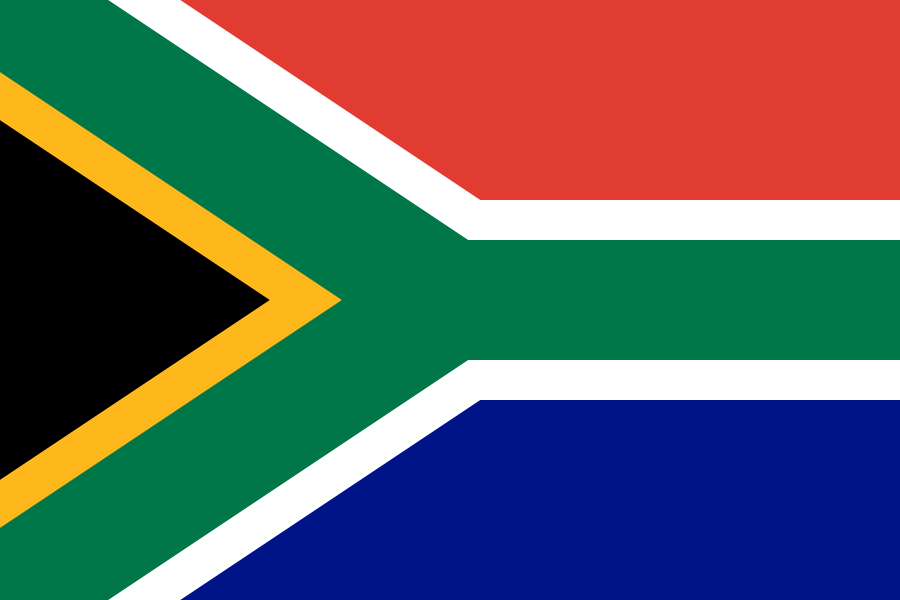
남아프리카 공화국
수도
프리토리아
대륙
아프리카
시간대
SAST · Africa/Johannesburg
좌표
33.92°S, 18.42°E
통화
ZAR (R)
국가 번호
+27
통행 방향
좌측
반구
남반구
공용어
영어
측량 단위
미터법
알고 계셨나요?
The City That Published the Date It Would Run Out of Water
1. In early 2018, Cape Town told four million people exactly which day the taps would be turned off.
They called it Day Zero. It was defined as the moment the city's dams fell to 13.5% of capacity — at which point municipal supply would be cut to hospitals and other critical services only, and everyone else would queue for water at 200 collection points.
After three consecutive years of poor rainfall, dam levels had fallen to 25% by late January 2018.
2. The ration was 25 litres a day. The target to avoid it was 50.
A typical urban resident uses around 200 litres a day. Cape Town asked its residents to live on 50 — the lowest target ever set during a drought anywhere, and in line with the WHO's minimum for maintaining health and safety. Under Day Zero itself, the figure would have dropped to 25 litres, collected by hand and carried home.
3. The city put a countdown on the motorway.
Electronic boards on the freeways, normally used for traffic information, displayed how many days of water the city had left. A public dashboard published weekly dam levels. A city-wide map let households compare their consumption with their neighbours'. The weekly water report became a topic on the radio and at dinner tables.
4. And then the date kept moving.
Day Zero was first projected for April. Then fixed at 12 April 2018. Then pushed to 11 May. Then to 4 June. Then to 9 July.
In June 2018 the region received average rainfall for the first time in four years, dam levels rose, and the city called Day Zero off indefinitely.
By then Capetonians had cut their water use by almost 60% from 2015 levels, giving the city one of the lowest per capita consumption rates of any major city in the world.
The clock: South Africa runs a single time zone, UTC+2, calculated for the 30th meridian east. Johannesburg sits close to that line and is only about eight minutes off its own solar noon.
Cape Town is at 18.4° east — nearly twelve degrees further west — which leaves it roughly 46 minutes ahead of its own sun. Same country, same clock, a thirty-eight minute difference in what that clock actually means.
So: a city that scheduled its own catastrophe, published the date, watched it move four times, and then cancelled it — by getting four million people to use a quarter of the water they had used three years earlier.
출처 및 참고자료
- Northeastern Global Resilience Institute (Ocak 2018 sonunda barajların %25'e düşmesi; Day Zero'nun %13,5 kapasitede tanımlanması; 200 dağıtım noktasında kişi başı 25 litre; 12 Nisan 2018 tarihi)
- ScienceDirect, Brühl & Visser (2016-2018 kuraklığında kişi başı günde 50 litre hedefi — bir kuraklıkta konmuş en düşük hedef; DSÖ asgarisiyle uyumu)
- Grist (otoyollardaki elektronik tabelalarda kalan su günü sayısı; haftalık baraj raporları; şehir çapında tüketim haritası; Haziran 2018'de dört yılın ilk ortalama yağışı)
- Princeton Successful Societies (2015 seviyesine göre yaklaşık %60 azalma; dünyadaki en düşük kişi başı tüketim oranlarından biri)
- AP / Fox News (tarihin 12 Nisan'dan 11 Mayıs'a, 4 Haziran'a ve 9 Temmuz'a ertelenmesi)
- National Geographic Education (dört milyon nüfus; normal kentli tüketimin ~200 litre olması)
- Boylam hesabı: Cape Town 18,4°D ve Johannesburg 28,0°D, UTC+2 meridyeni 30°D
연간 일조 시간
업무 시간
8시간 겹침