Kapstadt
UTC+2Südafrika · SAST
Mi., 23. Sept. 2026
Zeitzonen-Guide
Kapstadt, Südafrika läuft auf UTC+2. Diese Zeitzone bleibt das ganze Jahr über fest bei UTC+2 — es gibt keine Sommerzeit. Zwischen Kapstadt und New York besteht ein Zeitunterschied von 6 Stunden. Standard-Bürozeiten (9 bis 18 Uhr) überschneiden sich an etwa 3 Stunden täglich mit New York. Gute Zeit für Meetings: 15:00–18:00 in Kapstadt entspricht 09:00–12:00 in New York. Zwischen Kapstadt und London besteht ein Zeitunterschied von 1 Stunden. Standard-Bürozeiten (9 bis 18 Uhr) überschneiden sich an etwa 8 Stunden täglich mit London. Gute Zeit für Meetings: 10:00–18:00 in Kapstadt entspricht 09:00–17:00 in London. Zwischen Kapstadt und Tokio besteht ein Zeitunterschied von 7 Stunden. Standard-Bürozeiten (9 bis 18 Uhr) überschneiden sich an etwa 2 Stunden täglich mit Tokio. Gute Zeit für Meetings: 09:00–11:00 in Kapstadt entspricht 16:00–18:00 in Tokio. Diese Zeitzone wird auch mit Städten wie Madrid, Paris, Amsterdam geteilt. Die Beachtung dieser Zeitunterschiede erleichtert Telefonate und Reisen von und nach Kapstadt.
Praktische Infos
Kapstadt (Südafrika) hat rund 4.7M Einwohner. Heute gibt es etwa 10.1 Stunden Tageslicht: Sonnenaufgang um 07:36, Sonnenuntergang um 17:42. Diese Zeitzone bleibt das ganze Jahr über fest bei UTC+2 — es gibt keine Sommerzeit. Sie liegt auf der Südhalbkugel, etwa 34° südlich des Äquators. Es herrscht Linksverkehr.
Flagge
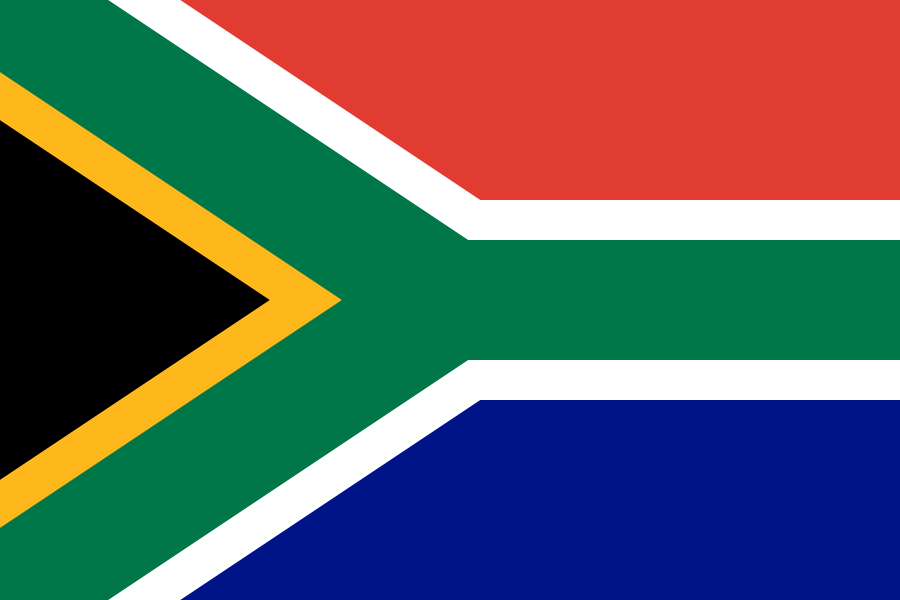
Südafrika
Hauptstadt
Pretoria
Kontinent
Afrika
Zeitzone
SAST · Africa/Johannesburg
Koordinaten
33.92°S, 18.42°E
Währung
ZAR (R)
Vorwahl
+27
Fahrseite
Links
Hemisphäre
Südlich
Sprache
Englisch
Maßsystem
Metrisch
Wussten Sie schon?
Die Stadt, die das Datum bekannt gab, an dem ihr das Wasser ausgehen würde
1. Anfang 2018 teilte Kapstadt vier Millionen Menschen genau mit, an welchem Tag die Wasserhähne zugedreht würden.
Sie nannten es Tag Null. Es wurde als der Moment definiert, in dem die Staudämme der Stadt auf 13,5 % ihrer Kapazität fielen – zu diesem Zeitpunkt würde die kommunale Versorgung nur noch für Krankenhäuser und andere wichtige Dienste unterbrochen, und alle anderen würden an 200 Sammelstellen für Wasser anstehen.
Nach drei aufeinanderfolgenden Jahren mit geringen Niederschlägen war der Staudammpegel bis Ende Januar 2018 auf 25 % gesunken.
2. Die Ration betrug 25 Liter pro Tag. Das Ziel zur Vermeidung lag bei 50.
Ein typischer Stadtbewohner verbraucht etwa 200 Liter pro Tag. Kapstadt forderte seine Bewohner auf, mit 50 zu leben – das niedrigste Ziel, das jemals während einer Dürre irgendwo gesetzt wurde, und im Einklang mit dem Minimum der WHO für die Aufrechterhaltung von Gesundheit und Sicherheit. Am Tag Null selbst wäre die Zahl auf 25 Liter gesunken, die von Hand gesammelt und nach Hause getragen worden wären.
3. Die Stadt hat einen Countdown auf der Autobahn angeordnet.
Elektronische Tafeln auf den Autobahnen, die normalerweise für Verkehrsinformationen verwendet werden, zeigten an, wie viele Tage Wasser der Stadt noch zur Verfügung standen. Ein öffentliches Dashboard veröffentlichte wöchentliche Staudammpegel. Mithilfe einer stadtweiten Karte können Haushalte ihren Verbrauch mit dem ihrer Nachbarn vergleichen. Der wöchentliche Wasserbericht wurde zum Thema im Radio und an den Esstischen.
4. Und dann verschob sich das Datum weiter.
Der Tag Null wurde ursprünglich für April prognostiziert. Dann auf 12. April 2018 festgelegt. Dann auf 11. Mai verschoben. Dann auf 4. Juni.. Dann auf 9. Juli..
Im Juni 2018 fiel in der Region zum ersten Mal seit vier Jahren durchschnittlicher Niederschlag, der Staudammpegel stieg und die Stadt beendete den Tag Null auf unbestimmte Zeit.
Bis dahin hatten die Kapstädter ihren Wasserverbrauch um fast 60 % gegenüber dem Niveau von 2015 gesenkt, was der Stadt eine der niedrigsten Pro-Kopf-Verbrauchsraten aller Großstädte der Welt bescherte.
Die Uhr: Südafrika hat eine einzige Zeitzone, UTC+2, berechnet für den 30. Meridian Ost. Johannesburg liegt nahe dieser Linie und ist nur etwa acht Minuten von seinem eigenen Sonnenmittag entfernt.
Kapstadt liegt bei 18,4° Ost – fast zwölf Grad weiter westlich – und ist damit seiner eigenen Sonne ungefähr 46 Minuten voraus. Dasselbe Land, dieselbe Uhr, ein Unterschied von achtunddreißig Minuten in der tatsächlichen Bedeutung dieser Uhr.
Also: Eine Stadt, die ihre eigene Katastrophe geplant, das Datum veröffentlicht, zugesehen hat, wie sie viermal verschoben wurde, und sie dann abgesagt hat – indem sie vier Millionen Menschen dazu gebracht hat, ein Viertel des Wassers zu verbrauchen, das sie drei Jahre zuvor verbraucht hatten.
Quellen
- Northeastern Global Resilience Institute (Stand 2018: 25 Tage im Monat; Day Zero mit 13,5 Minuten Laufzeit; 200 Tage vor 25 Tagen; 12. September 2018)
- ScienceDirect, Brühl & Visser (2016-2018, 2016–2018, erste Ausgabe eines 50-Liter-Hedefis – 2016–2018)
- Grist (Otoyollardaki elektronik tabelalarda kalan su günü sayısı; haftalık baraj raporları; şehir çapında tüketim haritası; Haziran 2018'de dört yılın ilk ortalama yağışı)
- Princeton Successful Societies (2015, 2015, 60 % der Beiträge; 2015)
- AP / Fox News (am 12. Januar, 11. Mai, 4. Mai und 9. September)
- National Geographic Education (mehr als 200 Liter; normaler Kentli-Tüketimin ~200 Liter)
- Standort: Kapstadt 18,4°D und Johannesburg 28,0°D, UTC+2 und 30°D
Jährliches Tageslicht
Arbeitszeiten
8 Std. Überschneidung