Windhoek
UTC+2나미비아 · CAT
2026년 9월 22일 (화)
시간대 분석 & 주요 사실
나미비아의 Windhoek 현지 시각은 현재 UTC+2 표준시입니다. 이 시간대는 일년 내내 고정(UTC+2)되어 있으며 서머타임을 적용하지 않습니다. Windhoek보다 뉴욕시간 빠릅니다. 뉴욕와(과)의 업무 시간 겹침은 하루 3시간(undefined)입니다. 글로벌 협업을 위한 최적의 화상 회의 시간대는 Windhoek입니다. Windhoek보다 런던시간 빠릅니다. 런던와(과)의 업무 시간 겹침은 하루 8시간(undefined)입니다. 글로벌 협업을 위한 최적의 화상 회의 시간대는 Windhoek입니다. Windhoek보다 도쿄시간 빠릅니다. 도쿄와(과)의 업무 시간 겹침은 하루 2시간(undefined)입니다. 글로벌 협업을 위한 최적의 화상 회의 시간대는 Windhoek입니다. 이 시간대를 공유하는 주요 도시: 마드리드, 파리, 암스테르담. WorldClock.info는 공식 IANA 데이터베이스를 기반으로 정확한 시간을 제공합니다.
도시 기본 정보
나미비아 Windhoek의 추정 인구는 약 430K입니다. 오늘의 일조 시간은 약 10.6시간입니다 (일출: 07:18, 일몰: 17:54). 이 시간대는 일년 내내 고정(UTC+2)되어 있으며 서머타임을 적용하지 않습니다. 남반구, 적도 남쪽 약 23°에 위치합니다. 차량은 좌측 통행입니다.
국기
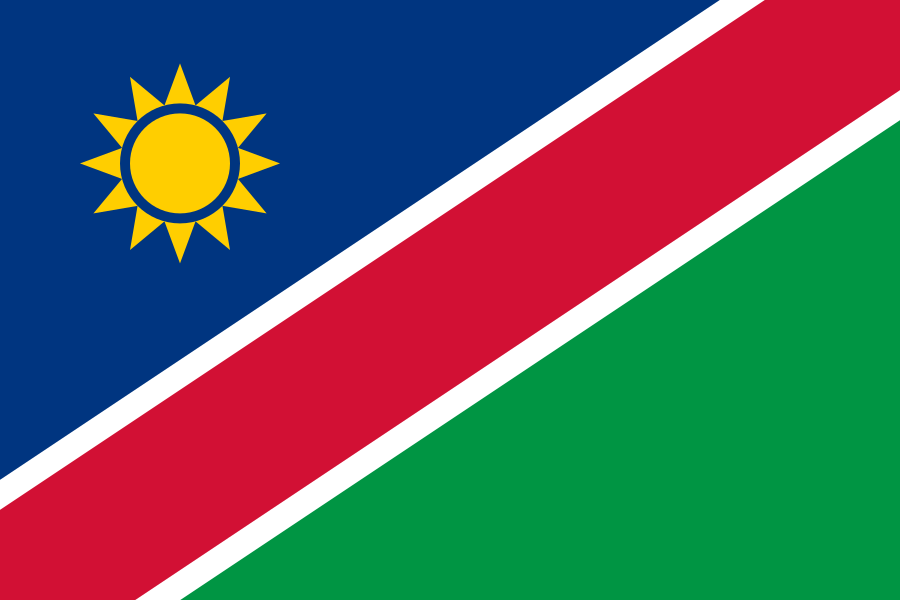
나미비아
수도
Windhoek 👑
대륙
아프리카
시간대
CAT · Africa/Windhoek
좌표
22.56°S, 17.07°E
통화
NAD ($)
국가 번호
+264
통행 방향
좌측
반구
남반구
공용어
영어
측량 단위
미터법
알고 계셨나요?
Namibia Abolished Daylight Saving by Springing Forward Permanently
Namibia covers 825,615 square kilometres — roughly the size of Spain and Germany combined — with a population density of about three people per square kilometre. After Mongolia, it is the least densely populated country in the world.
In the ǁKharas Region in the south, 161,514 square kilometres hold 109,893 people: a density of 0.68 per square kilometre. Fewer than one person for every square kilometre, across an area larger than England and Wales together.
What fills the space instead is worth counting. More than 40% of Namibia's land area is under some form of conservation. It was the first country in the world to write environmental protection into its constitution. It holds the world's largest population of free-roaming cheetah, estimated at around 2,500, and the largest free-roaming population of black rhino.
The recovery figures from the Kunene region are the striking ones. In 1982 the area held as few as 400 oryx, 600 springbok and 450 zebra. Today the numbers are around 29,000 oryx, 175,000 springbok and 18,800 zebra. Desert-adapted lions, down to fewer than 25 by the mid-1990s, now number over 150.
The clock: and in 2017 Namibia solved its daylight saving problem with a manoeuvre that almost nobody notices.
The country had observed DST since 1994, running on West Africa Time (UTC+1) in winter and moving to UTC+2 each summer. The Namibian Time Bill was approved by the National Council on 8 August 2017, after public hearings in which the majority supported it.
The change took effect on 3 September 2017 — the exact date on which Namibians would have put their clocks forward for summer anyway. Except this time they did not put them back. The country adopted Central Africa Time, UTC+2, as its permanent year-round standard.
The last act is the neat part. On 24 October 2017, daylight saving officially ended in Namibia. No clocks were changed, because the country had already switched zones.
It is the same move Iceland made in 1968: abolish the clock change by keeping summer time forever. Namibia did it forty-nine years later, and now shares a permanent clock with South Africa.
A country with fewer than three people per square kilometre decided that changing the clock twice a year was more coordination than it needed.
출처 및 참고자료
- timeanddate.com, *Namibia Adopts New Time Zone* (8 Ağustos 2017'de Ulusal Konsey onayı; kamu dinlemeleri; WAT'tan CAT'e kalıcı geçiş; 3 Eylül tarihi)
- timeanddate.com, *Time Change 2017 in Namibia* (**24 Ekim 2017'de DST resmen bitti ama saatler değiştirilmedi, çünkü Windhoek aynı anda dilim değiştirmişti**)
- time.now (1994-2017 arası DST; kalıcı UTC+02:00; Africa/Windhoek)
- Wikipedia, *Geography of Namibia* (825.615 km²; Moğolistan'dan sonra en seyrek nüfuslu; km² başına 2,7 kişi)
- Wikipedia, *ǁKharas Region* (161.514 km², 109.893 nüfus, 0,68/km²)
- arebbusch.com (koruma alanlarının kara alanının %40'ından fazlasını kaplaması)
- booknamibia.com (dünyanın en büyük serbest dolaşan çita popülasyonu, ~2.500; anayasada çevre koruması)
- Natural Habitat Adventures / WWF (Kunene'de 1982'de 400 oriks, 600 springbok, 450 zebra → bugün 29.000, 175.000, 18.800; çöl aslanlarının 25'ten 150'ye çıkması)
연간 일조 시간
업무 시간
8시간 겹침