Le Cap
UTC+2Afrique du Sud · SAST
mar. 22 sept. 2026
Guide du fuseau horaire
Le Cap, Afrique du Sud est calé sur UTC+2. Ce fuseau horaire reste fixé toute l'année à UTC+2 — pas d'heure d'été. Il y a 6 heures de décalage entre Le Cap et New York. Les horaires habituels de bureau (9h–18h) se chevauchent environ 3 heures par jour avec New York. Créneau optimal pour un appel : 15:00–18:00 à Le Cap correspond à 09:00–12:00 à New York. Il y a 1 heures de décalage entre Le Cap et Londres. Les horaires habituels de bureau (9h–18h) se chevauchent environ 8 heures par jour avec Londres. Créneau optimal pour un appel : 10:00–18:00 à Le Cap correspond à 09:00–17:00 à Londres. Il y a 7 heures de décalage entre Le Cap et Tokyo. Les horaires habituels de bureau (9h–18h) se chevauchent environ 2 heures par jour avec Tokyo. Créneau optimal pour un appel : 09:00–11:00 à Le Cap correspond à 16:00–18:00 à Tokyo. Ce fuseau horaire est également partagé avec des villes comme Madrid, Paris, Amsterdam. Prendre en compte ces décalages facilite les appels et les voyages vers et depuis Le Cap.
Informations pratiques
Le Cap (Afrique du Sud) compte environ 4.7M habitants. Aujourd'hui, il y a environ 10.1 heures de jour : lever du soleil à 07:36, coucher à 17:42. Ce fuseau horaire reste fixé toute l'année à UTC+2 — pas d'heure d'été. Elle est située dans l'hémisphère sud, à environ 34° au sud de l'équateur. La circulation se fait à gauche.
Drapeau
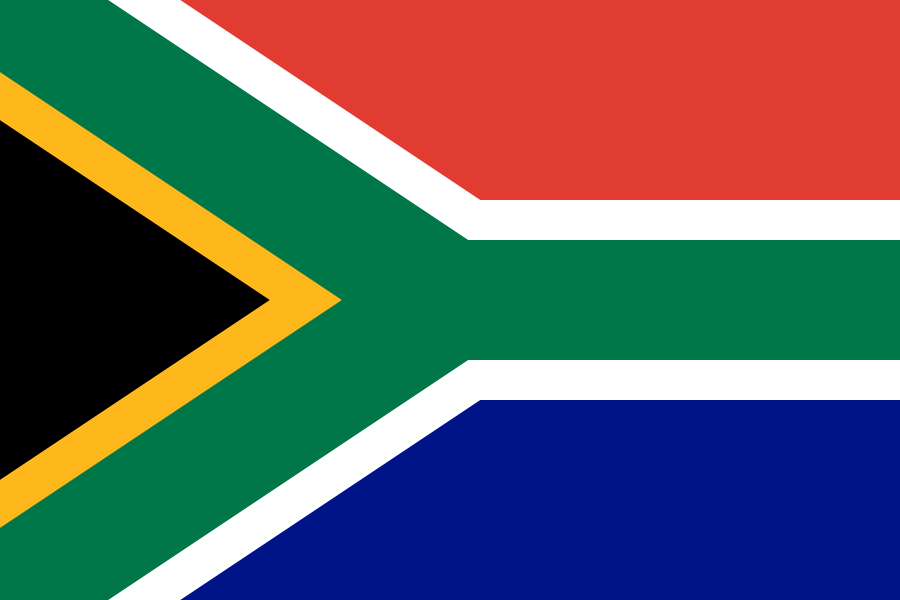
Afrique du Sud
Capitale
Pretoria
Continent
Afrique
Fuseau horaire
SAST · Africa/Johannesburg
Coordonnées
33.92°S, 18.42°E
Devise
ZAR (R)
Indicatif
+27
Sens de circulation
Gauche
Hémisphère
Sud
Langue
Anglais
Système de mesure
Métrique
Le saviez-vous ?
La ville qui a publié la date à laquelle elle manquerait d'eau
1. Début 2018, Cape Town a indiqué à quatre millions de personnes le jour exact où les robinets seraient fermés.
Ils l'ont appelé le Jour zéro. Il a été défini comme le moment où les barrages de la ville sont tombés à 13,5 % de leur capacité — moment auquel l'approvisionnement municipal serait coupé uniquement pour les hôpitaux et autres services essentiels, et tout le monde ferait la queue pour obtenir de l'eau à 200 points de collecte.
Après trois années consécutives de faibles précipitations, le niveau des barrages était tombé à 25 % fin janvier 2018.
2. La ration était de 25 litres par jour. L’objectif pour l’éviter était de 50.
Un citadin type consomme environ 200 litres par jour. Le Cap a demandé à ses habitants de vivre avec 50 — l'objectif le plus bas jamais fixé lors d'une sécheresse, et conforme au minimum de l'OMS pour maintenir la santé et la sécurité. Sous le Jour Zéro lui-même, ce chiffre serait tombé à 25 litres, collectés à la main et ramenés à la maison.
3. La ville a mis un compte à rebours sur l'autoroute.
Des panneaux électroniques sur les autoroutes, normalement utilisés pour les informations sur la circulation, affichaient combien de jours d'eau il restait à la ville. Un tableau de bord public publiait les niveaux hebdomadaires des barrages. Une carte de la ville permet aux ménages de comparer leur consommation avec celle de leurs voisins. Le rapport hebdomadaire sur l'eau est devenu un sujet à la radio et à table.
4. Et puis la date a continué à avancer.
Le Jour Zéro était initialement prévu pour avril. Puis fixé au 12 avril 2018. Puis repoussé au 11 mai. Puis au 4 juin. Puis au 9 juillet.
En juin 2018, la région a reçu des précipitations moyennes pour la première fois en quatre ans, le niveau des barrages a augmenté et la ville a suspendu indéfiniment le Jour Zéro.
À cette époque, les Capetoniens avaient réduit leur consommation d'eau de près de 60 % par rapport aux niveaux de 2015, ce qui donnait à la ville l'un des taux de consommation par habitant les plus bas de toutes les grandes villes du monde.
L'horloge : L'Afrique du Sud utilise un seul fuseau horaire, UTC+2, calculé pour le 30e méridien est. Johannesburg se trouve à proximité de cette ligne et n'est qu'à environ huit minutes de son propre midi solaire.
Le Cap se trouve à 18,4° est, soit près de douze degrés plus à l'ouest, ce qui lui laisse environ 46 minutes d'avance sur son propre soleil. Même pays, même horloge, trente-huit minutes de différence dans la signification réelle de cette horloge.
Donc : une ville qui a programmé sa propre catastrophe, a publié la date, l'a vue bouger quatre fois, puis l'a annulée – en obligeant quatre millions de personnes à utiliser un quart de l'eau qu'elles avaient utilisée trois ans plus tôt.
Sources
- Northeastern Global Resilience Institute (Ocak 2018 sonunda barajların %25'e düşmesi; Day Zero'nun %13,5 kapasitede tanımlanması; 200 jours noktasında kişi bası 25 litre; 12 Nisan 2018 tarihi)
- ScienceDirect, Brühl & Visser (2016-2018 kuraklığında kişi başı günde 50 litres hedefi — bir kuraklıkta konmuş en düşük hedef; DSÖ asgarisiyle uyumu)
- Grist (otoyollardaki elektronik tabelalarda kalan su günü sayısı; haftalık baraj raporları; şehir çapında tüketim haritası; Haziran 2018'de dört yılın alk ortalama yağışı)
- Princeton Successful Societies (2015 seviyesine göre yaklaşık %60 azalma; dünyadaki et düşük kişi bası tüketim oranlarından biri)
- AP / Fox News (12 nisan, 11 mai, 4 haziran et 9 temmuz'a ertelenmesi)
- National Geographic Education (dört milyon nüfus ; kentli tüketimin normal ~200 litres olması)
- Boylam est disponible : Cape Town 18,4°D et Johannesburg 28,0°D, UTC+2 meridyeni 30°D
Ensoleillement annuel
Heures de travail
8 h de chevauchement