Darwin
UTC+9:30Australien · ACST
Aktuelle Ortszeit in Darwin
Mi., 23. Sept. 2026
Sonnenaufgang, Sonnenuntergang und Tageslicht in Darwin
Zeitzonen-Ratgeber für Darwin
Darwin, Australien läuft auf UTC+9:30. Diese Zeitzone bleibt das ganze Jahr über fest bei UTC+9:30 — es gibt keine Sommerzeit. Zwischen Darwin und New York besteht ein Zeitunterschied von 13.5 Stunden. Standard-Arbeitszeiten überschneiden sich mit New York gar nicht; Meetings erfordern einen frühen oder späten Termin. Zwischen Darwin und London besteht ein Zeitunterschied von 8.5 Stunden. Standard-Bürozeiten (9 bis 18 Uhr) überschneiden sich an etwa 0.5 Stunden täglich mit London. Gute Zeit für Meetings: 17:30–18:00 in Darwin entspricht 09:00–09:30 in London. Zwischen Darwin und Tokio besteht ein Zeitunterschied von 0.5 Stunden. Standard-Bürozeiten (9 bis 18 Uhr) überschneiden sich an etwa 8.5 Stunden täglich mit Tokio. Gute Zeit für Meetings: 09:30–18:00 in Darwin entspricht 09:00–17:30 in Tokio. Diese Zeitzone wird auch mit Städten wie Adelaide, Alice Springs geteilt. Die Beachtung dieser Zeitunterschiede erleichtert Telefonate und Reisen von und nach Darwin.
Praktische Informationen zu Darwin
Darwin (Australien) hat rund 150K Einwohner. Heute gibt es etwa 11.2 Stunden Tageslicht: Sonnenaufgang um 06:54, Sonnenuntergang um 18:06. Diese Zeitzone bleibt das ganze Jahr über fest bei UTC+9:30 — es gibt keine Sommerzeit. Sie liegt auf der Südhalbkugel, etwa 12° südlich des Äquators. Es herrscht Linksverkehr.
Flagge
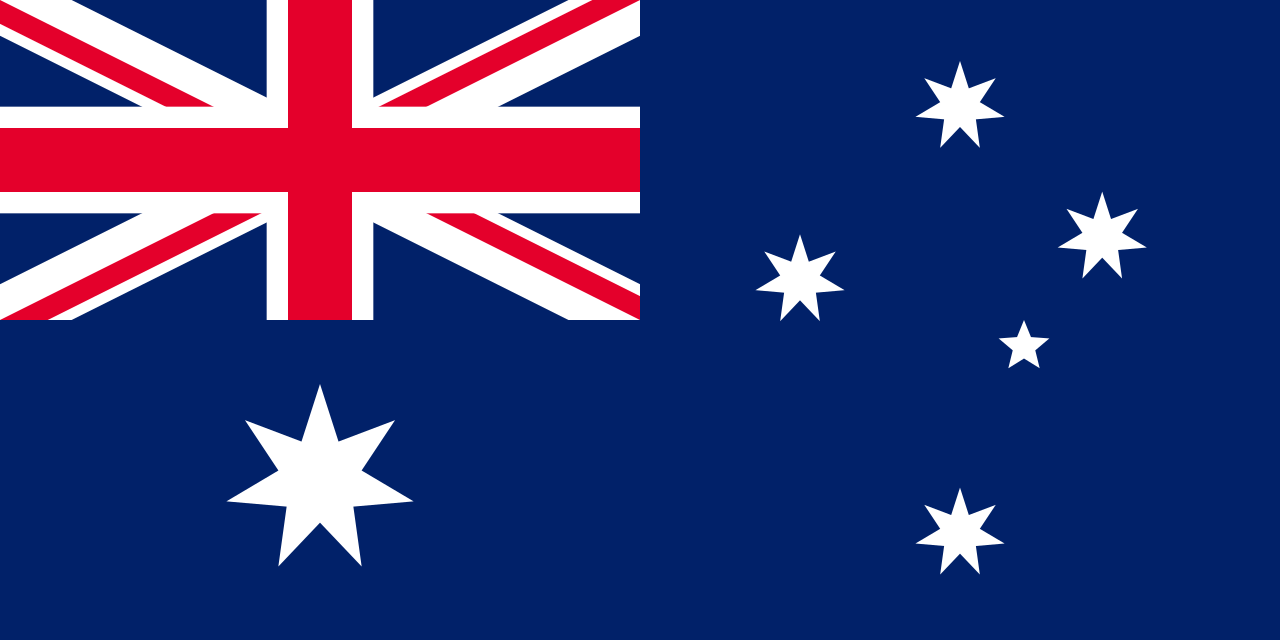
Australien
Hauptstadt
Canberra
Kontinent
Ozeanien
Zeitzone
ACST · Australia/Darwin
Koordinaten
12.46°S, 130.85°E
Währung
AUD ($)
Vorwahl
+61
Fahrseite
Links
Hemisphäre
Südlich
Sprache
Englisch
Maßsystem
Metrisch
Wussten Sie schon?
Sechs Prozent der Häuser blieben stehen
Zyklon Tracy überquerte Darwin in den frühen Morgenstunden des Weihnachtstages 1974. Die Windgeschwindigkeit wurde offiziell mit 217 km/h gemessen, bevor das Anemometer des Bureau of Meteorology zerstört wurde.
Die Zahlen im Nachhinein sind schwer zu fassen.
Mehr als 70 % der Gebäude Darwins wurden zerstört, darunter 80 % der Häuser. Nur 6 % der Häuser blieben bewohnbar. Von einer Bevölkerung von etwa 47.000 wurden in der folgenden Woche etwa 25.000 Menschen obdachlos und 35.362 wurden evakuiert – die größte Friedensevakuierung in der Geschichte Australiens. Ein Boeing 747-Flug ab Darwin beförderte 674 Personen.
66 Menschen kamen ums Leben. Strom, Wasser, Kanalisation und Kommunikation wurden unterbrochen. Bis zu 60 % der Evakuierten kamen nie zurück.
Der Wiederaufbau erfolgte fast genauso schnell wie die Zerstörung. Die Darwin Reconstruction Commission wurde am 28. Februar 1975 gegründet und betreute in drei Jahren mehr als 2.500 neue Häuser. Bis Mitte 1978 hatte Darwin die Bevölkerungszahl vor dem Zyklon wieder erreicht.
Die wichtigste Konsequenz war nationaler Natur. Tracy veranlasste in ganz Australien neue Bauvorschriften – Anforderungen, die Gebäude gegen herumfliegende Trümmer schützen und Dächer an ihren Fundamenten befestigen müssen. Als Zyklon Larry 2006 Innisfail und Zyklon Yasi 2011 Mission Beach trafen, beide stärker als Tracy, gab es keine Todesopfer.
Die Uhr: Das Northern Territory hat fast alles, was mit dem Bau einer Stadt zu tun hat, neu aufgebaut und hat seine Uhr seit 1944 nicht mehr angerührt.
In Darwin gilt UTC+9:30 – die gleiche Halbstundenzone wie in Adelaide – und es gibt seit über achtzig Jahren keine Sommerzeit mehr.
Was jeden Oktober eine kleine Kuriosität hervorbringt. Adelaide springt auf UTC+10:30 vor; Darwin nicht. Die beiden Städte haben die Hälfte des Jahres genau die gleiche Uhr, in der anderen Hälfte sind sie eine Stunde voneinander entfernt, ohne dass sich eine der beiden Städte relativ zur Sonne bewegt hätte.
Bei 12° Süd gibt es saisonal nur sehr wenig Tageslicht zu sparen. Darwins kürzester und längster Tag unterscheiden sich um etwas mehr als eine Stunde. Es ist dieselbe Arithmetik, die Bogotá, Honolulu und Queensland dort hält, wo sie sind.
Quellen
- Avustralya Ulusal Arşivleri (ca. 70 % des Jahres, 80 % des Tages; 6 % der Laufzeit; 25.000 Euro; 28. September 1975; Kosten: 2.500 %). Konut, 150 Millionen Dollar pro Mal)
- Australian Disaster Resilience Knowledge Hub (217 km/s; 47.000 Kilometer und 35.362 Meilen; 1978 im Jahr 2018)
- Wikipedia, *Cyclone Tracy* (66 Öl; 837 Mio. A$)
- Library & Archives NT (674 Monate, 747 Monate; 60 % der Downloads sind nicht möglich)
- National Museum of Australia (viele weitere Besucher; Larry und Yasi'de can kaybı olmaması)
Tageslicht im Jahresverlauf in Darwin
Sonne und Uhr in Darwin (2026)
Darwin liegt auf 130.8° O. Die Zeitzone UTC+9:30 ist am Meridian 143° Ost ausgerichtet. Der Abstand von 11.7° bedeutet, dass die Uhr der Sonne um rund 47 Minuten vorausgeht: Der Sonnenmittag fällt auf etwa 12:47 Uhr statt auf 12:00 Uhr. Die Zone bleibt das ganze Jahr bei UTC+9:30 – eine Sommerzeit gibt es hier nicht.
Der längste Tag 2026 ist der 22. Dezember mit 12 Std. 51 Min. Tageslicht, der kürzeste der 22. Juni mit 11 Std. 23 Min.. Dazwischen liegen 1 Std. 28 Min.. Innerhalb der Tropen bleibt die Tageslänge das ganze Jahr in einem schmalen Bereich.
Der früheste Sonnenaufgang und der späteste Sonnenuntergang fallen nicht auf den längsten Tag. In Darwin geht die Sonne am 20. November um 06:11 Uhr am frühesten auf, am spätesten unter geht sie erst am 25. Januar um 19:20 Uhr. Der Grund ist die Zeitgleichung: Die elliptische Erdbahn und die Neigung der Erdachse verschieben den Sonnenmittag im Jahreslauf um einige Minuten vor und zurück.
Nach Sonnenuntergang bleibt der Himmel noch eine Weile hell. In Darwin dauert diese bürgerliche Dämmerung zur Tagundnachtgleiche etwa 21 Minuten.
Alle Werte in diesem Abschnitt werden aus Breite, Länge und IANA-Zeitzone der Stadt mit den Sonnenalgorithmen der NOAA (Spencer, 1971) berechnet und sind unterhalb von 65° Breite auf etwa ±2 Bogenminuten genau.