Liverpool
UTC+1United Kingdom · BST
Tue, 15 Sept 2026
Timezone Guide
Liverpool, United Kingdom runs on UTC+1. Clocks move forward each spring and back each autumn: UTC+0 in winter, UTC+1 in summer. Next change: 26 Oct. There is a 5-hour difference between Liverpool and New York. Standard 9-to-6 working hours overlap for about 4 hours a day with New York. A good time to connect: 14:00–18:00 in Liverpool lines up with 09:00–13:00 in New York. Liverpool and London currently share the same clock. Standard 9-to-6 working hours overlap for about 9 hours a day with London. A good time to connect: 09:00–18:00 in Liverpool lines up with 09:00–18:00 in London. There is a 8-hour difference between Liverpool and Tokyo. Standard 9-to-6 working hours overlap for about 1 hours a day with Tokyo. A good time to connect: 09:00–10:00 in Liverpool lines up with 17:00–18:00 in Tokyo. This timezone is also shared with cities such as Lisbon, Lagos, Casablanca. Keeping these offsets in mind makes it easier to schedule calls or travel to and from Liverpool.
Practical Info
Liverpool (United Kingdom) is home to roughly 500K people. Today brings about 16.9 hours of daylight: sunrise at 04:48, sunset at 21:42. Clocks move forward each spring and back each autumn: UTC+0 in winter, UTC+1 in summer. Next change: 26 Oct. It sits in the Northern Hemisphere, about 53° north of the equator. Traffic drives on the left.
Flag
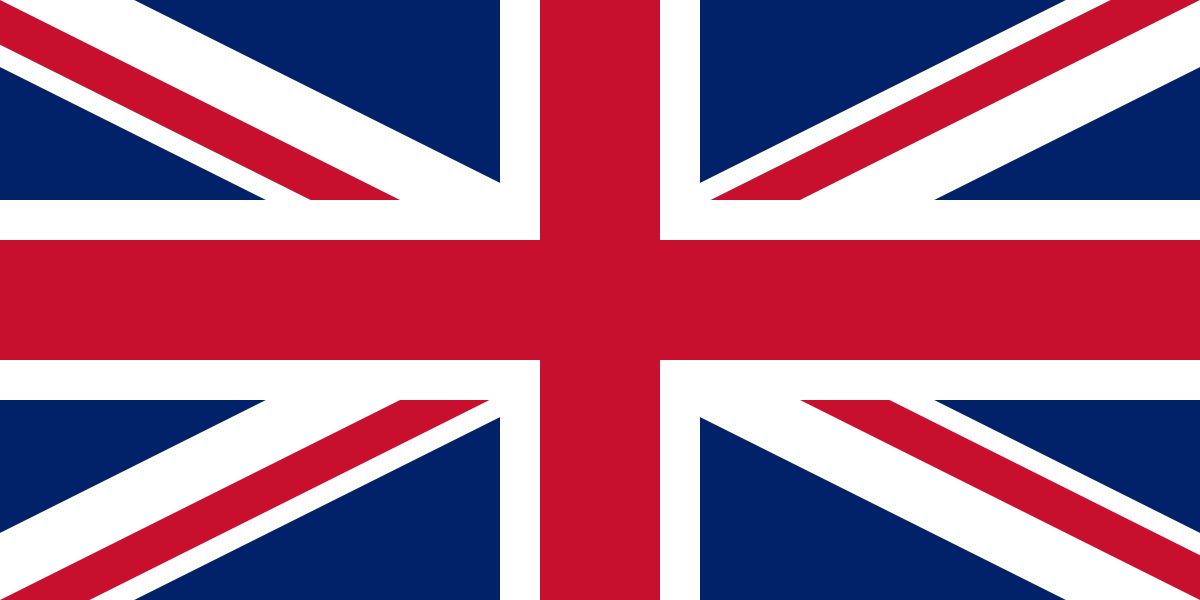
United Kingdom
Capital
London
Continent
Europe
Time Zone
BST · Europe/London
Coordinates
53.40°N, 2.99°W
Currency
GBP (£)
Calling Code
+44
Driving Side
Left
Hemisphere
Northern
Language
English
Measurement System
Metric
Did You Know?
The City With the Most Number Ones
Liverpool has produced more UK number-one singles than any other city, a tally that owes a great deal to four of its residents in the 1960s but did not stop with them. Guinness has recognised it as the world's capital of pop in that narrow, countable sense.
The clock: Liverpool's waterfront was a transatlantic terminus, which meant living with two clocks — ships' time and shore time — long before time zones were formalised in the 1880s.
Annual Daylight
Working Hours
7h overlap