Salamanca
UTC+2Spain · CEST
Tue, 15 Sept 2026
Timezone Guide
Salamanca, Spain runs on UTC+2. Clocks move forward each spring and back each autumn: UTC+1 in winter, UTC+2 in summer. Next change: 26 Oct. There is a 6-hour difference between Salamanca and New York. Standard 9-to-6 working hours overlap for about 3 hours a day with New York. A good time to connect: 15:00–18:00 in Salamanca lines up with 09:00–12:00 in New York. There is a 1-hour difference between Salamanca and London. Standard 9-to-6 working hours overlap for about 8 hours a day with London. A good time to connect: 10:00–18:00 in Salamanca lines up with 09:00–17:00 in London. There is a 7-hour difference between Salamanca and Tokyo. Standard 9-to-6 working hours overlap for about 2 hours a day with Tokyo. A good time to connect: 09:00–11:00 in Salamanca lines up with 16:00–18:00 in Tokyo. This timezone is also shared with cities such as Madrid, Paris, Amsterdam. Keeping these offsets in mind makes it easier to schedule calls or travel to and from Salamanca.
Practical Info
Salamanca (Spain) is home to roughly 145K people. Today brings about 15.1 hours of daylight: sunrise at 06:54, sunset at 22:00. Clocks move forward each spring and back each autumn: UTC+1 in winter, UTC+2 in summer. Next change: 26 Oct. It sits in the Northern Hemisphere, about 41° north of the equator. Traffic drives on the right.
Flag
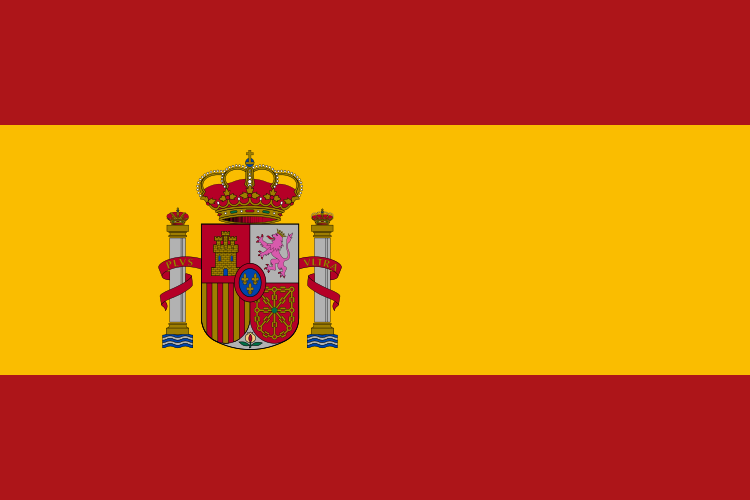
Spain
Capital
Madrid
Continent
Europe
Time Zone
CEST · Europe/Madrid
Coordinates
40.97°N, 5.66°W
Currency
EUR (€)
Calling Code
+34
Driving Side
Right
Hemisphere
Northern
Language
Spanish
Measurement System
Metric
Did You Know?
A Frog Carved on a Facade
Students traditionally must find the small frog carved on a skull in the plateresque facade of Salamanca's university before they can graduate. The university was founded in 1218, the oldest in the Spanish-speaking world.
The clock: Salamanca keeps UTC+1. Its Plaza Mayor, finished in 1755, is widely considered the finest in Spain.
Annual Daylight
Working Hours
8h overlap