Nuremberg
UTC+2Germany · CEST
Tue, 15 Sept 2026
Timezone Guide
Nuremberg, Germany runs on UTC+2. Clocks move forward each spring and back each autumn: UTC+1 in winter, UTC+2 in summer. Next change: 26 Oct. There is a 6-hour difference between Nuremberg and New York. Standard 9-to-6 working hours overlap for about 3 hours a day with New York. A good time to connect: 15:00–18:00 in Nuremberg lines up with 09:00–12:00 in New York. There is a 1-hour difference between Nuremberg and London. Standard 9-to-6 working hours overlap for about 8 hours a day with London. A good time to connect: 10:00–18:00 in Nuremberg lines up with 09:00–17:00 in London. There is a 7-hour difference between Nuremberg and Tokyo. Standard 9-to-6 working hours overlap for about 2 hours a day with Tokyo. A good time to connect: 09:00–11:00 in Nuremberg lines up with 16:00–18:00 in Tokyo. This timezone is also shared with cities such as Madrid, Paris, Amsterdam. Keeping these offsets in mind makes it easier to schedule calls or travel to and from Nuremberg.
Practical Info
Nuremberg (Germany) is home to roughly 520K people. Today brings about 16.2 hours of daylight: sunrise at 05:12, sunset at 21:24. Clocks move forward each spring and back each autumn: UTC+1 in winter, UTC+2 in summer. Next change: 26 Oct. It sits in the Northern Hemisphere, about 49° north of the equator. Traffic drives on the right.
Flag
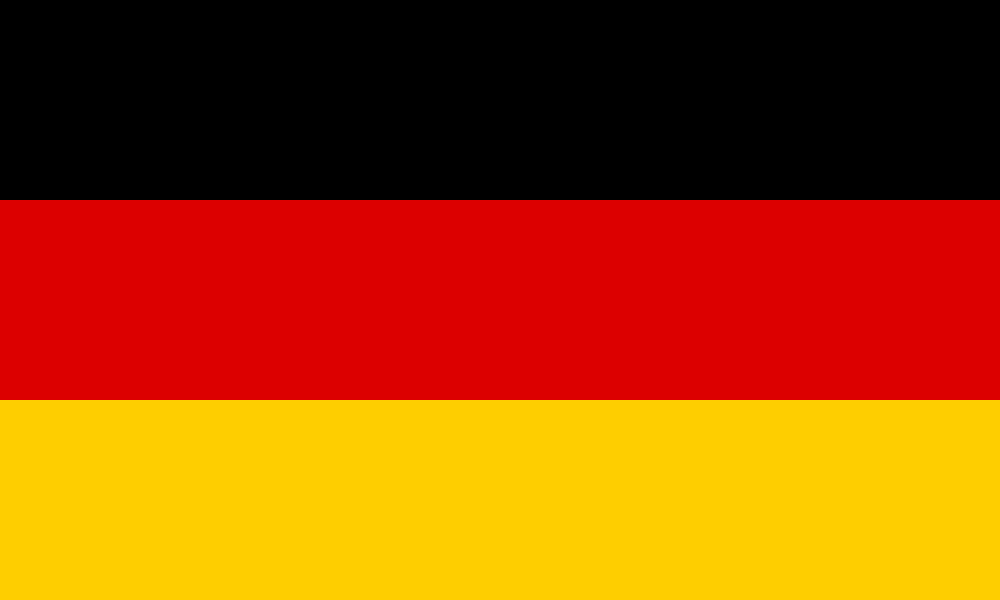
Germany
Capital
Berlin
Continent
Europe
Time Zone
CEST · Europe/Berlin
Coordinates
49.45°N, 11.08°E
Currency
EUR (€)
Calling Code
+49
Driving Side
Right
Hemisphere
Northern
Language
German
Measurement System
Metric
Did You Know?
The Trials and the Toy Fair
Courtroom 600 in Nuremberg hosted the 1945–46 trials that established the modern framework of international criminal law. The same city hosts the world's largest toy fair each January, which has run since 1950.
The clock: Nuremberg keeps UTC+1. Its Christkindlesmarkt, documented from 1628, is one of the oldest Christmas markets in Germany.
Annual Daylight
Working Hours
8h overlap